
Artificial Intelligence in Emergency and Crisis Management
SAPEA Rapid Evidence Review Report / SAPEA Expert Workshop Report
11 December 2025
In October 2025, SAPEA (Science Advice for Policy by European Academies) convened an expert workshop on Artificial Intelligence in Emergency and Crisis Management as part of the Scientific Advice Mechanism to the European Commission. The workshop highlighted AI’s potential to support early warning, situational awareness, and damage assessment, while stressing its limitations in novel or ethically complex situations. The need for transparency, ethical oversight, and meaningful human control was emphasised. The discussions included contributions from Prof. Joachim Denzler, (Friedrich Schiller University Jena) and Prof. Dr. Markus Reichstein (Max Planck Institute for Biogeochemistry), both Directors of the ELLIS Unit Jena, highlighting the role of ELLIS expertise in European science-for-policy processes.
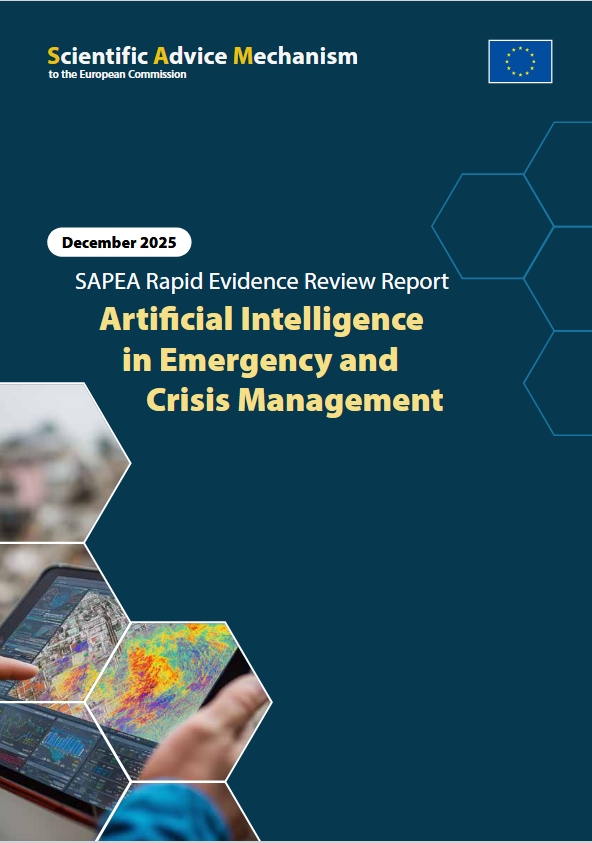
In October 2025, SAPEA (Science Advice for Policy by European Academies) convened an expert workshop on Artificial Intelligence in Emergency and Crisis Management as part of the Scientific Advice Mechanism to the European Commission. The workshop highlighted AI’s potential to support early warning, situational awareness, and damage assessment, while stressing its limitations in novel or ethically complex situations. The need for transparency, ethical oversight, and meaningful human control was emphasised. The discussions included contributions from Prof. Joachim Denzler, (Friedrich Schiller University Jena) and Prof. Dr. Markus Reichstein (Max Planck Institute for Biogeochemistry), both Directors of the ELLIS Unit Jena, highlighting the role of ELLIS expertise in European science-for-policy processes. In October 2025, SAPEA convened an expert online workshop on Artificial Intelligence in Emergency and Crisis Management as part of the Scientific Advice Mechanism to the European Commission. The workshop provided structured feedback on a draft Rapid Evidence Review Report requested by DG ECHO, focusing on the opportunities, risks, and mitigation strategies associated with the use of AI in crisis preparedness and response. The workshop brought together an interdisciplinary group of experts from policy institutions, applied research, and academia including Prof. Dr. Joachim Denzler, Director of the ELLIS Unit Jena (Friedrich Schiller University Jena), underscoring the active contribution of ELLIS expertise to European science-for-policy processes. Participants contributed both written and oral feedback under Chatham House rules, aiming to strengthen the scientific robustness, clarity, and policy relevance of the report. Experts highlighted key strengths of the report, including its comprehensive and balanced treatment of AI applications, its strong interdisciplinary evidence base, and its operational relevance for policymakers and practitioners. The report was praised for its accessibility and for providing actionable policy options relevant to the EU’s Emergency Response Coordination Centre (ERCC).
At the same time, the workshop identified several areas for improvement. These included the need for clearer structure and signposting for policymakers, stronger prioritisation of AI applications based on maturity and readiness, and more consistent and critically evaluated case studies. Particular emphasis was placed on data availability, model reliability, ensemble modelling, and the importance of a socio-technical perspective that integrates human expertise with AI systems (“hybrid intelligence”). A dedicated session on AI and resilience in military and civilian contexts further highlighted the importance of layered resilience, interconnected cyber-physical-social systems, and advanced analytics beyond simple dashboards. Overall, the workshop significantly informed the finalisation of the SAPEA Rapid Evidence Review Report, strengthening its evidence base and reinforcing the role of European research communities—including ELLIS—in shaping AI-informed crisis management policy.